Understand how to structure content automation in a headless CMS by integrating APIs, webhooks, structured content, preview environments, and editorial governance.
Written and published by Blog Post Automatic-O
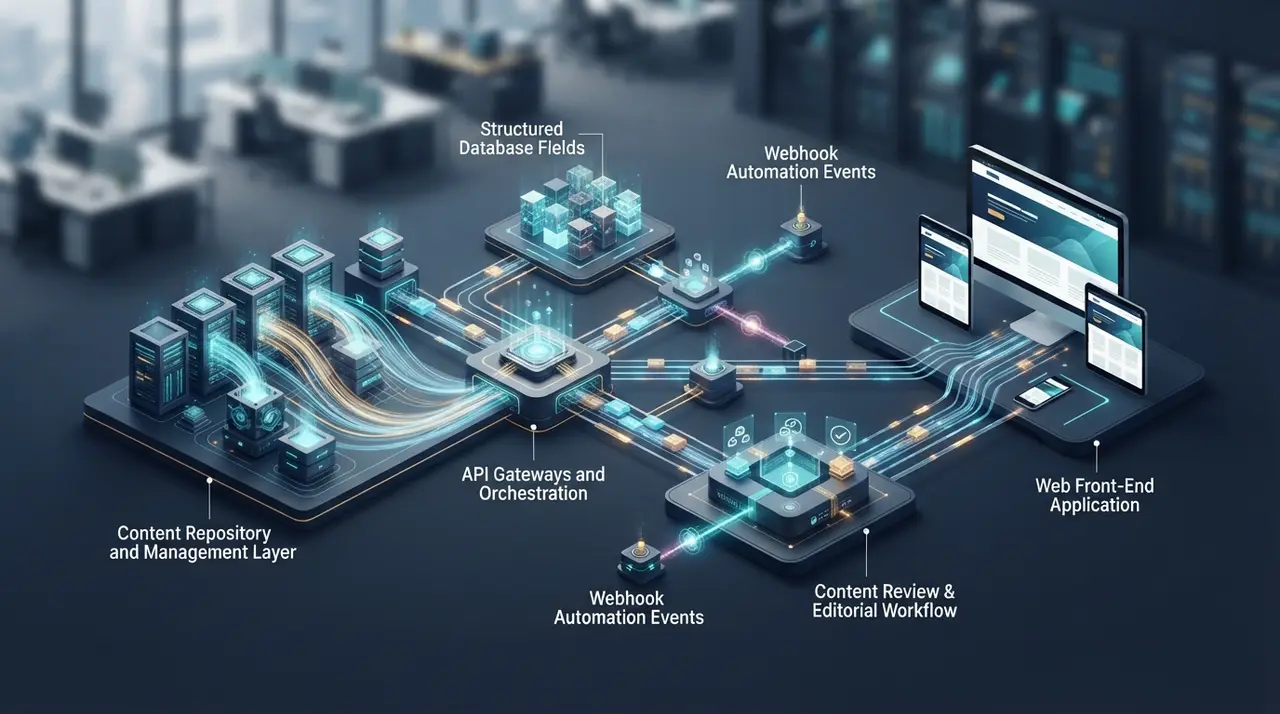
Content automation in a headless CMS is the practice of integrating editorial generation engines directly with decoupled content managers through APIs and webhooks. This architecture makes it possible to produce, validate, and publish articles at scale without sacrificing data structure, metadata control, or application loading speed.
The architecture of a headless CMS separates storage and presentation
A headless CMS functions exclusively as a repository and structured data manager, serving all its content via REST or GraphQL APIs to any consuming interface. Unlike traditional monolithic systems, where the administrative dashboard and the final look of the site are tightly coupled, the decoupled architecture allows post data to exist independently of the graphical display layer.
When we apply content automation to this scenario, the text generation engine does not inject formatted HTML into a generic visual text field. Instead, automation populates specific attributes of a data schema, including title, slug, body text in Markdown or JSON, taxonomy tags, image data, and SEO metadata. This enables the same publication to feed multiple digital channels, such as websites, mobile apps, and voice assistants, while keeping semantic integrity intact.
How the integration flow works via APIs and webhooks
The technical integration between a text generation tool and a headless CMS occurs through authenticated event-driven API requests. The generator system sends structured payloads to the CMS endpoints, registering the publication directly in the system's database.
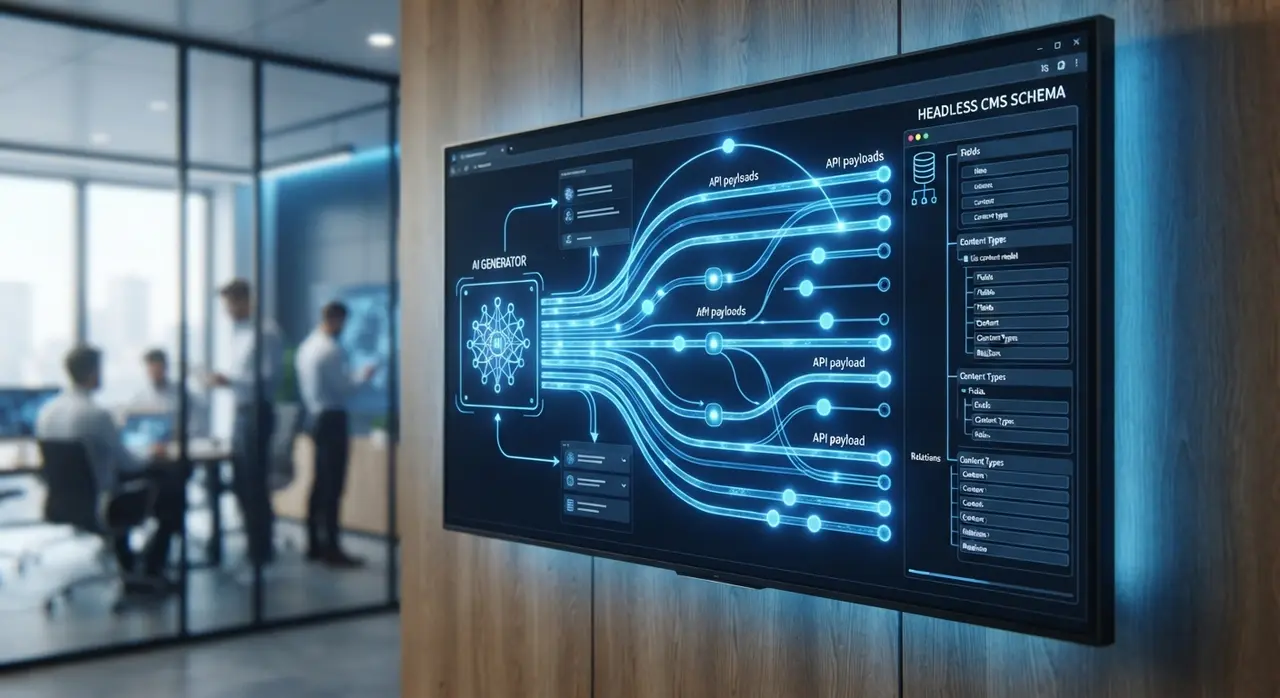
Webhooks play the role of asynchronous event triggers throughout the post's lifecycle. For example, when the editorial engine finishes creating a new article, it sends a webhook to the headless CMS API with post data in draft status. When a human editor approves this content inside the CMS, the system itself triggers a webhook to the front-end hosting platform (such as Vercel or Netlify), triggering a new automated page build without requiring manual intervention from the development team.
The importance of structured content and media management
Structured content ensures that each editorial element is stored in typed, reusable fields within the CMS database. This approach prevents formatting degradation and simplifies technical optimization for search engines and generative search systems.
Instead of storing an entire article in a single rigid visual HTML block, the headless CMS separates text into conceptual blocks. Below is a practical comparison between automation in a headless CMS and in a traditional monolithic CMS:
| Criterion | Automated Headless CMS | Traditional (Monolithic) CMS |
|---|---|---|
| Data structure | Typed fields (JSON/Markdown) decoupled from presentation | Single block of HTML (Rich Text/WYSIWYG) |
| Multichannel scale | Native via API for web, app, and partner systems | Limited to the CMS's own web template |
| Publishing process | Asynchronous via webhooks and static builds | Synchronous with direct writing to the page server |
| Preview environment | Real-time rendering in decoupled staging | Preview coupled to active theme |
| API governance | Granular control by token, scope, and permissions | Usually restricted to plugins and dashboard users |
In media management, automation generates and uploads images directly to the cloud storage provider or CDN configured in the CMS, linking the media asset ID to the post cover field. This structure is essential to scaling blog content automation operations without generating broken links or unoptimized images.
Editorial governance and preview environment in automated publishing
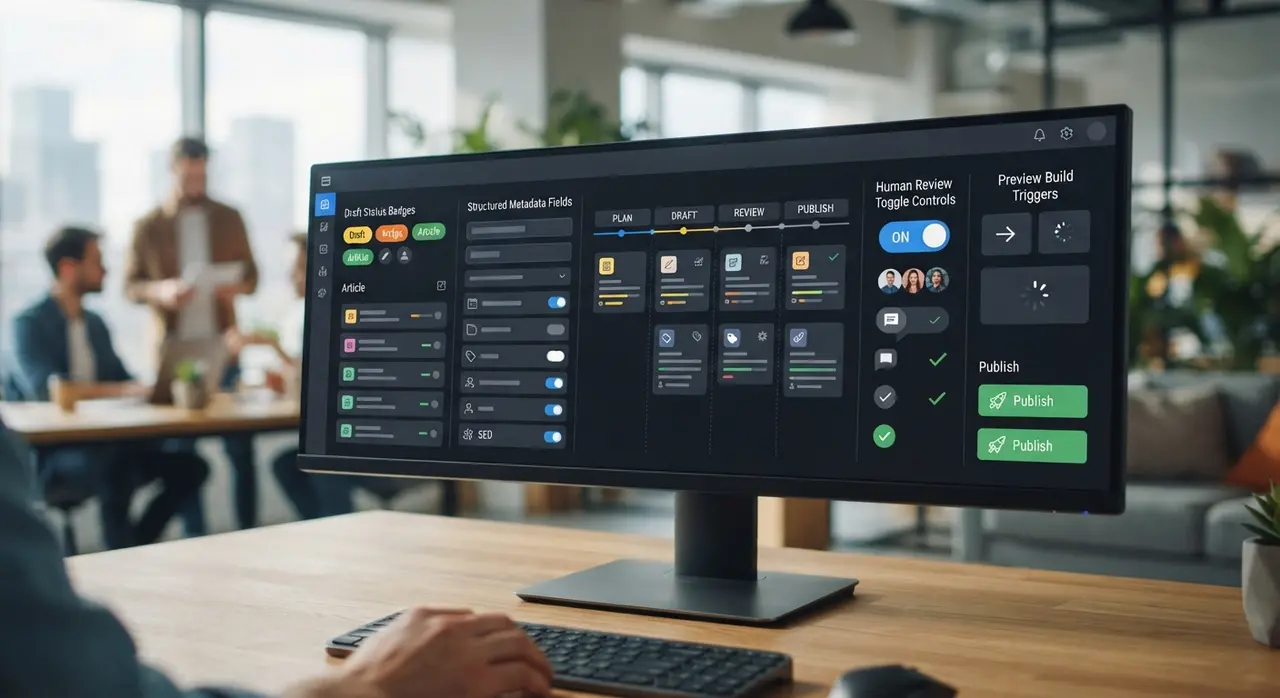
Editorial governance in headless systems requires automation to respect strict approval workflows before consolidating content into production. Directly inserting automated articles in a published state creates risks to brand authority and can introduce conceptual inconsistencies.
Best practice in editorial engineering dictates that all content generated via API enters the CMS with draft status (draft). From that point, the front-end uses a preview staging URL, allowing the team to review the exact layout and accuracy of the information before final approval. To understand in detail how to structure this review routine without compromising team time, see our guide on editorial blog approval with AI.
Case study: A B2B tech company used Strapi as a headless content manager, but maintained a slow manual process of copying, formatting, and filling out SEO fields for each technical publication. By implementing integration with BlogPost Automático via API, articles began being delivered directly to Strapi's draft queue with populated metadata and tags. This operational shift reduced publication time per post from hours to minutes, while keeping human validation in the preview environment before triggering the production webhook.
Main bottlenecks and limitations of headless automation
The main challenge of content automation in a headless CMS is configuration complexity and the continuous maintenance of rigid data schemas. If the field structure in the CMS is altered without corresponding updates in the API integration, publishing requests may fail silently or generate validation errors.
Another critical point is managing rate limits and API token authorization. Headless platforms impose restrictions on the number of simultaneous requests per second. The automation pipeline must include retry queues with exponential backoff and schema validation to ensure no article is lost during peak generation times.
Frequently asked questions
What is content automation in a headless CMS?
It is the technical process of using automated routines and APIs to create, structure, populate metadata, and send articles to a decoupled content manager. This eliminates manual formatting and publishing work inside the CMS dashboard.
How do webhooks work in editorial automation?
Webhooks work as automatic messages sent between systems when an event occurs. In blog automation, a webhook can notify the hosting platform to build the website as soon as a post changes from draft to published status.
Is it safe to integrate AI tools directly into a headless CMS API?
Yes, as long as the integration respects API key authentication and initially inserts content with draft status. This ensures that the marketing or engineering team reviews the material in a preview environment before making it public.
Which are the main headless CMSs on the market compatible with automation?
Systems like Strapi, Contentful, Sanity, Hygraph (GraphCMS), and Ghost (via administrative API) are widely used for automation due to their well-documented REST and GraphQL APIs.